


Designing Rain-Smart Cambridge Gardens: SuDS Planting for Clay Soils
Is Your Cambridge Garden Ready for the Next Drought? Ecological Design, SuDS and Native Planting for Clay Soils
In my last post, I wrote about drought-proofing your land. If you haven't read it yet, I'd start there — it sets the context for everything I'm about to say here. The short version: we don't have a water problem in this country, we have a water storage problem. And that problem starts, and can partly be solved, in your garden.
This post is the practical Cambridge application of that thinking. Specifically: what does a rain-smart garden actually look like when you're dealing with Cambridge clay?
Clay soils are a testing brief. In late summer, after 50-odd days without meaningful rain, they crack and shrink. Come winter, or a heavy August downpour, they saturate almost immediately, shedding water off the surface rather than letting it soak in. Paths sheen, lawns squelch, and borders sulk. Most gardeners treat this as something to engineer away. We treat it as something to design with.
Read the Site Before You Touch It
Before we draw anything, we map the garden. Light, shade, wind, where water lands, where it runs, where it sits. On Cambridge clay, we know roughly what we're going to find: perched water in winter, surface sealing after rain, shrink-swell in dry spells. But the detail matters — which corner holds the longest, where the downpipe sheds its water, where the ground is already compacted.
Simple soil tests tell us what we're working with. A levels plan tells us where the water should linger, pass through, or infiltrate. This isn't over-engineering a domestic garden; it's reading it properly before making decisions.
Slow the Flow
I used that phrase in my last post. It applies equally at garden scale.
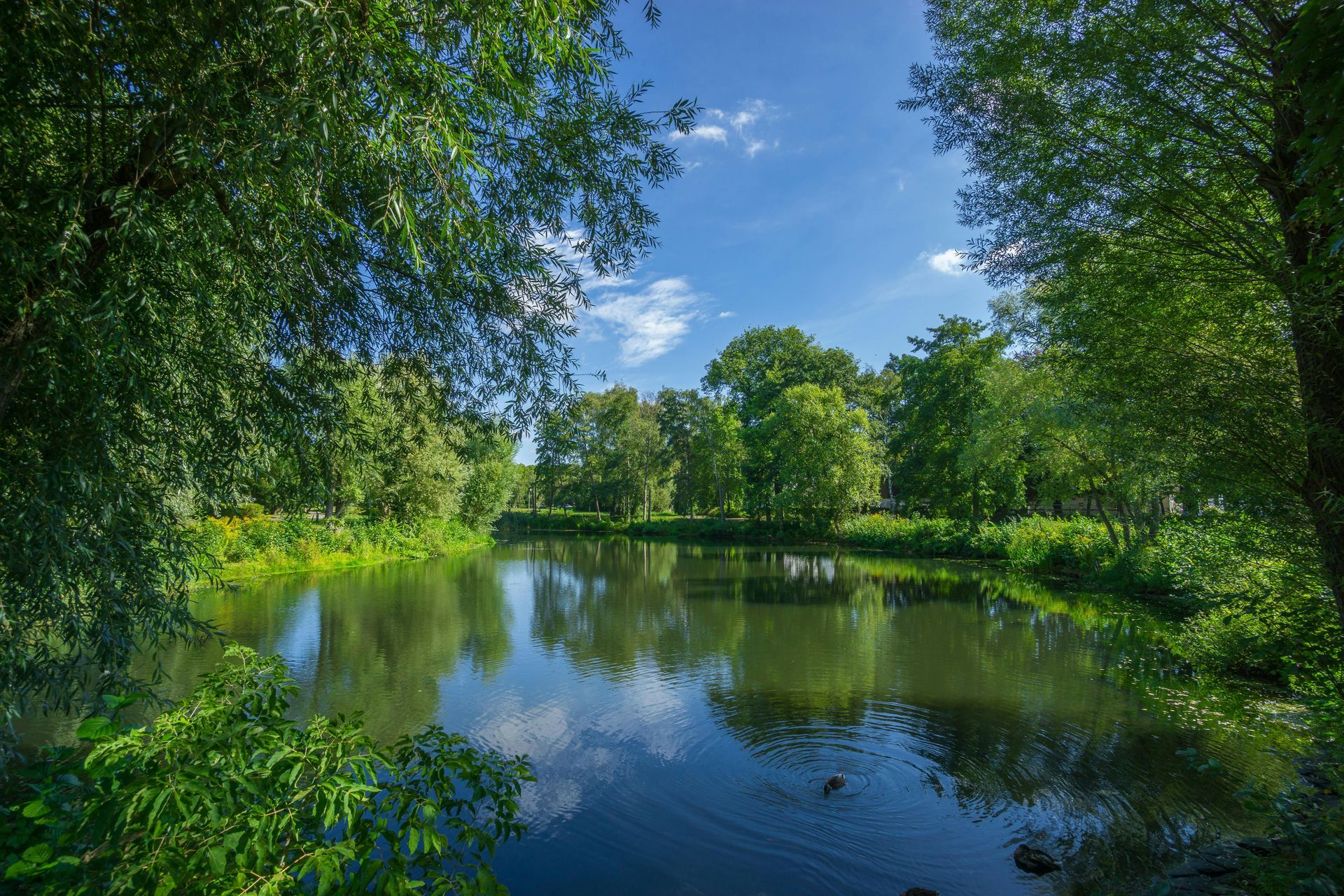
A shallow swale, 150 to 250mm deep, can do a surprising amount of work on a small plot. Soften the edges with meadow grasses and moisture-tolerant perennials and it reads as planting, not drainage. Permeable paths — self-binding gravel on a free-draining compacted base — move people while letting water percolate. Where clay is particularly heavy, we create infiltration steps: structural sub-bases and local changes in soil composition so water slows and spreads rather than rushes toward a neighbour or a downpipe.
A downpipe doesn't need to feed a drain. Send it into a rill, a stone-filled channel, a planted basin. Plan an overflow route toward lawn or meadow, not toward a door. The result is a system that works quietly, resets after a storm, and doesn't require you to think about it.
Planting for Drought and Deluge
The plants do the work, if you choose the right ones. The aim is species that hold their composure in winter wet and have enough root depth to ride summer dry. That's not a contradiction — the right plants manage both, though not all of them.
In the wettest parts of a scheme: Filipendula, marginal sedges, Guelder rose on the wetter edges. In the drier shoulders: Achillea, Knautia, Selfheal, birdsfoot trefoil. Hawthorn and Dog rose in hedging for shelter and berries. Spring bulbs and early nectar to carry pollinators before the main perennials wake.
In drought-prone corners, we tune the soil with mineral grit and bring in dry-grassland companions alongside the native palette. Drought tolerance and near-native species aren't a betrayal of the ecological brief — they're a sensible response to the climate we're actually designing for. We're planning for the next 50 years, not the last 50.
Meadow planting pairs particularly well with swale and rain-garden schemes. A meadow strip alongside a swale isn't just aesthetically good; it's ecologically coherent. The plants that thrive in transitional, periodically wet ground are often exactly the species-rich mixes that do best in meadow conditions anyway.
Small Spaces
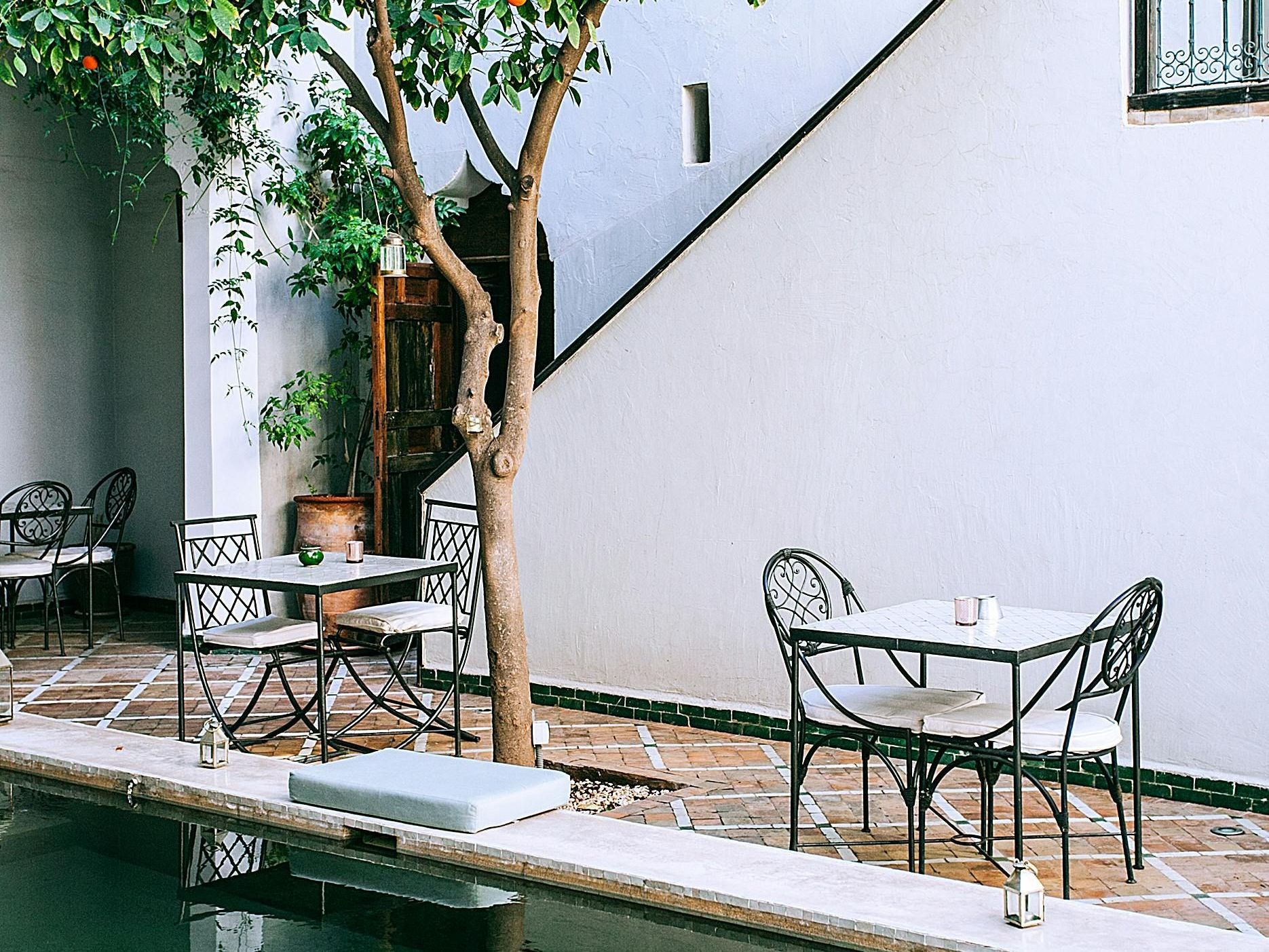
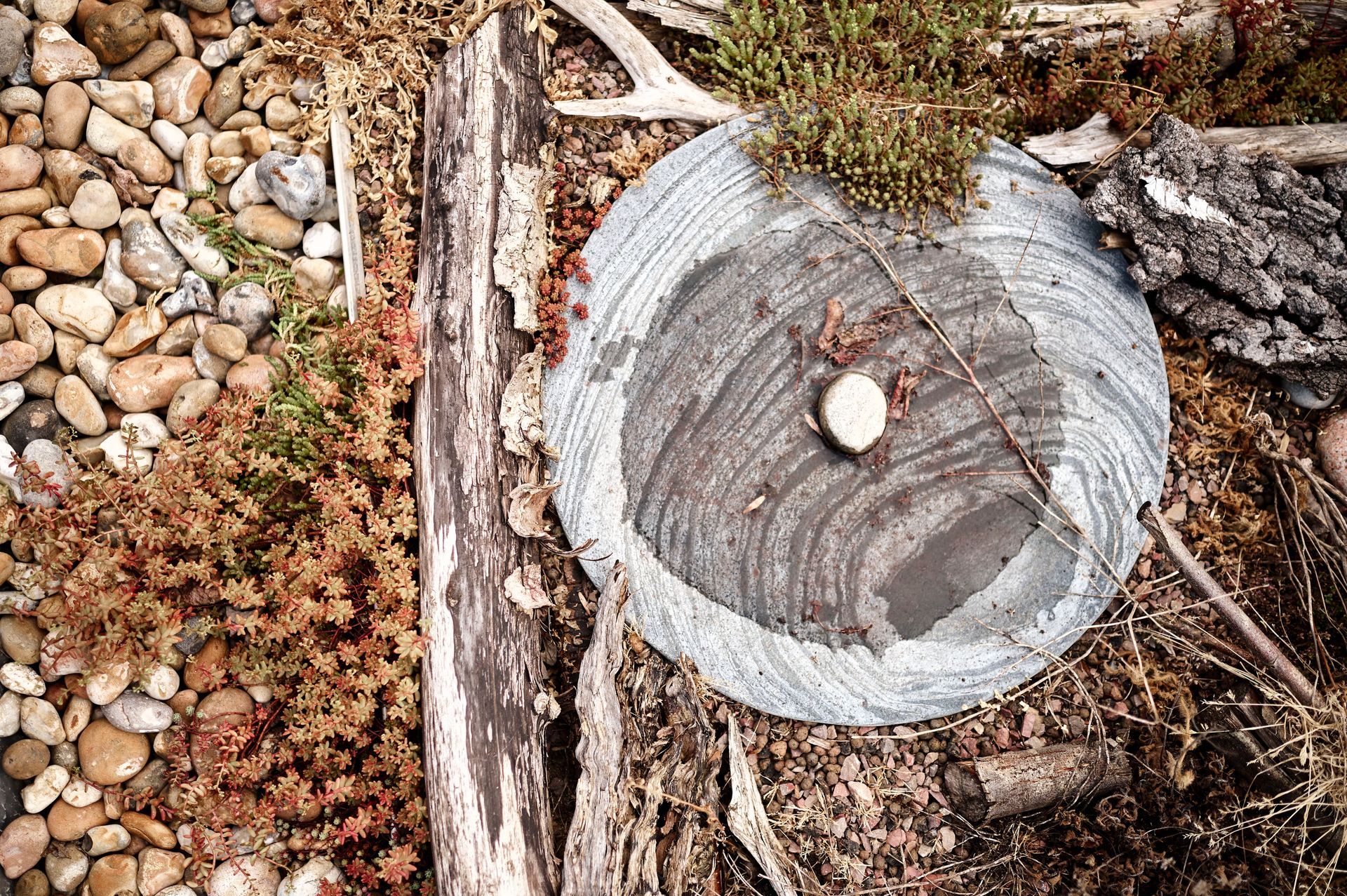
Even a courtyard or terrace can do something useful. A mini rain-garden basin beneath a downpipe, planted with marginal-tolerant perennials. Permeable stepping routes. A shallow water bowl. A log stack. A 1m x 2m rain-garden pocket can intercept roof runoff, create seasonal interest, and contribute to biodiversity net gain on a small residential plot — which matters increasingly for Cambridge garden biodiversity planning and the planning process more broadly.
What This Has to Do With Planning
Cambridge Local Plan Policy 31 requires green or brown biodiverse roofs on flat roofs. SuDS features on new or refurbished gardens increasingly intersect with BNG assessments and Urban Greening Factor calculations. If your project sits within that planning framework, rain-garden design and SuDS planting aren't optional extras — they're part of the submission.
We align rain-garden proposals with BNG requirements and can support ecology surveys and BNG condition assessments as part of the same design process. It's more efficient, and it produces better outcomes than bolting an ecology report onto a garden design as an afterthought.
Autumn Is the Right Moment
Warm soil, steady autumn moisture: the best conditions for establishing SuDS planting. Roots knit before the winter wet arrives, and the plants are ready to do their job when the first serious rain comes.
The rain will return. It always does. The question is whether your garden is ready to hold it.
If you're in or near Cambridge and want to talk through a rain-smart garden, get in touch. A site survey is always the starting point — we won't draw anything until we've walked the ground with you.
