

Specifying for regenerative soils
Soils that support Biodiversity and help with drought tolerant planting!
Why understanding and supporting soil biology is essential for drought ready design.
Water is a finite resource, and our use of it within the landscape must adapt. With prolonged periodsof drought and stress becoming the norm, we need to change how we work — from designworkflows to specifications.
Drought tolerance isn’t simply held within the plants — true drought tolerance lies in the soil. Morespecifically, it’s rooted in the life of soil microbes. Healthy soil, rich in fungal and bacterial activity,enables plants to access water and nutrients, maintain structure, and survive drought. Lifeless soil,no matter how well planted, cannot. Our specifications must reflect this.
Most soil specifications default to the British Standard (BS3882), which focuses on texture, pH, andchemistry but says little about biology. Soil that meets the standard may be uniform and sterile,unable to support microbial networks or root health. By specifying to a standard rather than to a place, we create landscapes that fail under stress — especially drought.
The design team should challenge standardised, generic approaches. Even at RIBA Stage 3,architects should liaise with the landscape architect or garden designer to discuss the soil — and, by extension, the wider landscape strategy. A well-designed and thriving landscape complements the architecture, while a considered soil strategy can save the client money in the long term throughreduced plant losses and lower maintenance costs.
Using the same soil specification for every project, regardless of site geology or existing ecology, is a mistake. Ask early questions:
• How will the soil be protected and managed?
• Can existing soil be retained and improved rather than replaced?
• Are microbial health and structure considered in the specification?
A considered, site-specific specification should always include measures to minimise compaction and disturbance, avoid unnecessary topsoil replacement, and incorporate materials or inoculants that support microbial life.
Architects should also advocate for local provenance within the landscape specification. Locally adapted plants are better suited to native soils and microclimates. Plants grown in distant nurseries under artificial conditions often struggle to establish in living soils.
Landscapes established through direct seeding or bare-root nursery stock are more drought-tolerantthan those created with container plants. Seed-grown plants form deeper roots and connect naturally with soil microbes, while container-grown plants often sit in sterile media that resist integration.Seeding can therefore reduce both costs and irrigation needs while improving resilience.
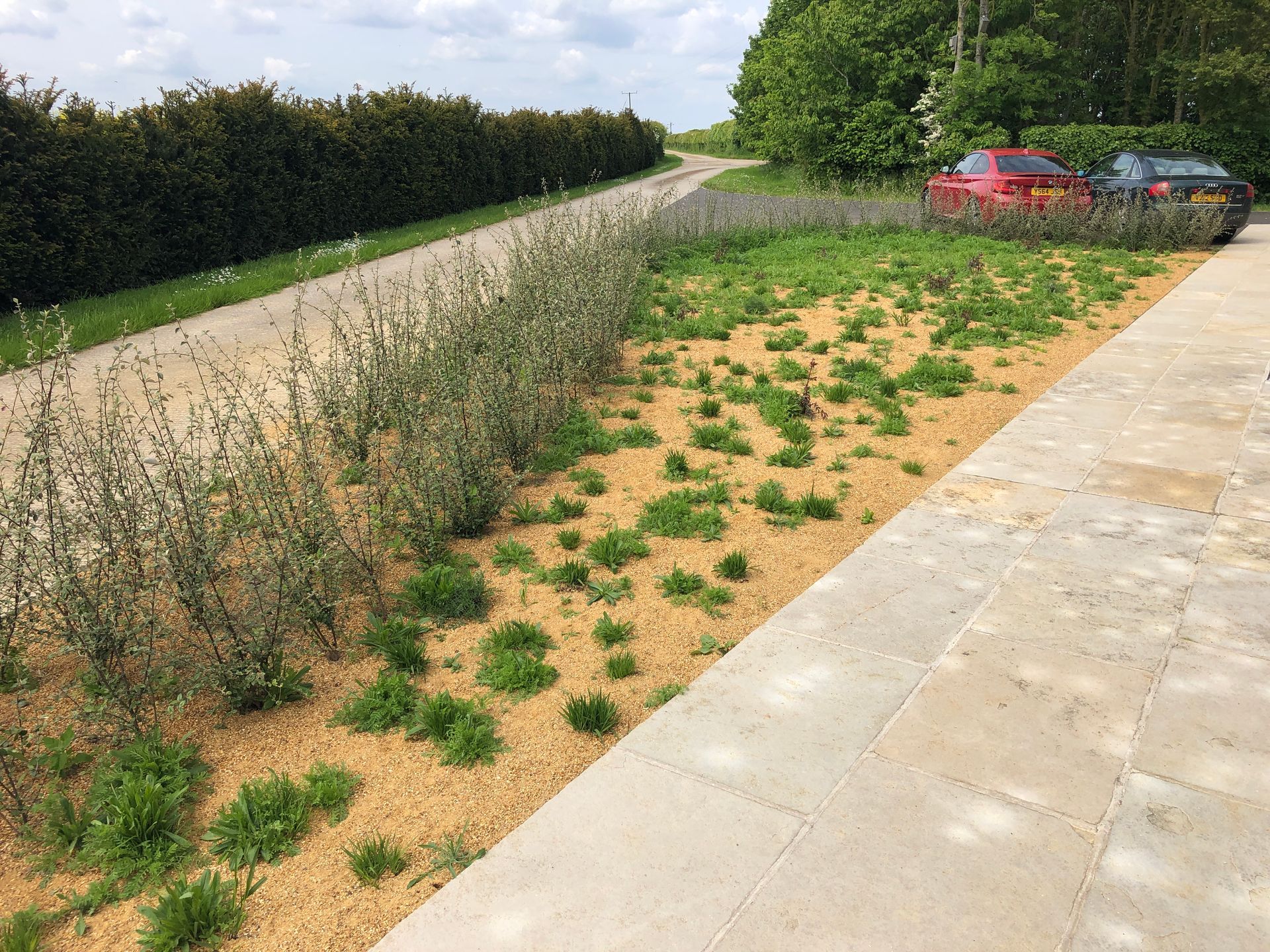
As the climate changes, we are moving towards conditions similar to the steppe — semi-aridregions with hot summers and variable rainfall. Mixed planting schemes combining native and non-native species adapted to both drought and temporary flooding will become essential. Such plants often thrive in mineral soils, which can be created onsite from construction waste such as crushed brick, concrete, sand, and gravel — turning waste into a resource.Another reason why early discussions within the design team at RIBA Stage 3 are vital is that they can highlight these opportunities for both design and client benefit.
Drought-tolerant landscapes are slow landscapes — they evolve over time. Instant landscapes, madefor immediate impact, are fragile and heavily water-dependent. Designing slow, living landscapes is the only regenerative path forward.
Author: Daniel Lee.