

Why Are Wildflower Meadows Important? An Ecological and Practical Perspective
Why Are Wildflower Meadows Important? An Ecological and Practical Perspective
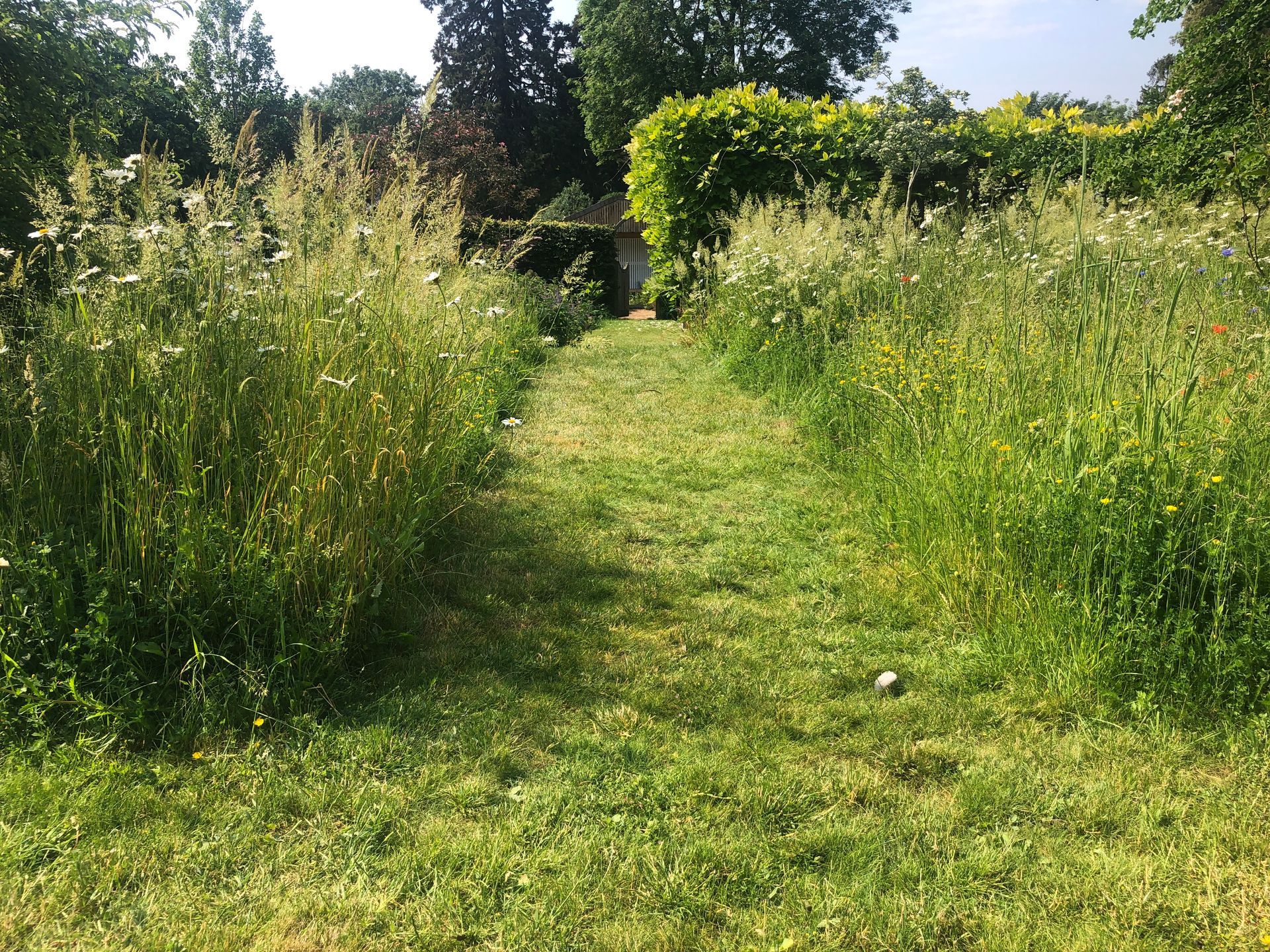
A practitioner-led explanation of why wildflower meadows matter, how they work, where they fail, and their role in nature recovery.
Wildflower meadows are often talked about as if they are a simple, feel-good solution to the biodiversity crisis: scatter some seed, step back, and let nature do the rest. That story is comforting — and mostly wrong.
In practice, wildflower meadows are important not because they are easy, fashionable, or visually dramatic, but because they are one of the few habitats that wildlife in Britain has co-evolved with over millennia — and one of the habitats we have most comprehensively dismantled in the last century.
Understanding why meadows matter means understanding what they actually do, how they change over time, and what is required to make them work.
Meadows in Practice: Where They Actually Happen
In my work, wildflower meadows most often come up in small urban and domestic settings: private gardens in and around Cambridge, Suffolk, and Norwich; shared spaces within housing developments; community gardens; and occasionally roadside verges.
This matters, because there’s a persistent assumption that meadows only make sense at scale — hectares of countryside rather than square metres of city. In reality, meadows can function at almost any size. Visually, large meadows are more dramatic, but ecologically even very small patches can act as stepping stones for flying insects, helping reconnect fragmented habitats across towns and cities.
A Case Study: When a Meadow Actually Changed Something
One communal project in Cambridge illustrates this well.
We replaced a drab, species-poor grassed area — dominated by rank grasses and the occasional clover — with a species-rich wildflower meadow. Within a short period, the site shifted from supporting almost no visible life to hosting over seven annual wildflower species and a wide range of perennials.
The changes were tangible:
- Maintenance dropped from frequent mowing to a single annual meadow cut in late summer.
- The space went from being underused and ignored to being visually valued.
- The meadow now provides pollen and nectar for roughly eight months of the year, supporting a far broader range of invertebrates.
- The site gained ecological function without increasing long-term management costs.
That combination — lower maintenance, higher biodiversity, greater public value — is rare in landscape work. Meadows can deliver it, but only under the right conditions.
What I’m Sceptical About
The biggest misconception is that wildflower meadows are low-maintenance.
They are not.
A well-functioning meadow can become a haven for invertebrates, small mammals, reptiles, and birds. It can support native solitary bees throughout much of the year. But this only happens with consistent, thoughtful management.
The idea that you can simply scatter seed and forget about it is a narrative reinforced by gardening programmes and simplified advice. In reality, neglect usually leads not to biodiversity, but to coarse grasses, nutrient build-up, and ecological decline.
When Meadows Fail — and Why
I’ve been involved in meadow projects that didn’t work, and the reasons are instructive.
In one case, we failed to properly account for variation in soil type across the site. Parts of the area sat on moisture-retentive, nutrient-rich clay. Those conditions favoured fast-growing tussocky grasses, which quickly out-competed slower-establishing perennial wildflowers.
The second failure was financial, not botanical: the client had not budgeted adequately for ongoing management.
The lesson was blunt but important:
- More time and money must go into site survey than people expect.
- Soil should be assessed across the whole site, not guessed.
- A meadow with no maintenance budget is a short-lived gesture, not a habitat.
In many cases, the long-term management budget matters more than the installation cost.
When Do Wildflower Meadows Start to Matter?
Immediately — but differently over time.
In year one, meadows are often dominated by pioneer species such as wild carrot or oxeye daisy. These flat, open flower forms are accessible to a wide range of insects: hoverflies, solitary bees, parasitic wasps, lacewings.
By year two, species such as yarrow and vetches may become more prominent.
By year three and beyond, slower-establishing plants like Bird’s-foot Trefoil often appear. This matters enormously: it is a larval food plant for around 15 species of butterfly.
So meadows are not static. Their importance lies in succession — different plants supporting different parts of the food web at different times.
How People Actually Relate to Meadows
Most people still engage with meadows primarily aesthetically. They are seen as something to look at, rather than something to understand.
Interestingly, we often see less vandalism around meadows than around lawns. People tend not to walk through them; they view them from the edge. Complaints usually arise in autumn and winter, when colour fades and plants senesce.
This reveals a deeper misunderstanding: the “dead” phase of a meadow is as important as the flowering phase. Seed heads feed birds. Standing stems shelter insects. What looks untidy is often ecologically productive.
What Good Meadow Management Really Looks Like
Good meadow management is not just about cutting — it’s about observation.
Whether you manage a meadow yourself or employ a gardener, time must be allowed to:
- Notice which species are thriving or disappearing
- Observe which insects are present — and which are absent
- Adjust management accordingly
This observational labour is rarely budgeted for, and it’s often where meadow projects fail. Consistency, not intensity, is what matters.
Are There Limits to Meadows?
Visually, very small meadows can feel awkward. Ecologically, they still matter.
In the context of a biodiversity crisis, every patch counts. A one-square-metre meadow can function as a stepping stone, helping insects move through an otherwise hostile urban landscape.
The real limits are not size, but expectations, soil, and maintenance capacity.
Meadows Are Not a Replacement — They’re Part of a Mosaic
If a client asks, “Why a meadow instead of trees, shrubs, or ornamental planting?”, the honest answer is: you shouldn’t choose one over the others.
Wildlife thrives on variety and overlap. Meadows work best when they sit alongside native trees, shrubs, hedges, ponds, and scrub — creating the ecotones where food webs reconnect.
This is about mosaic, not monoculture.
The Bottom Line
Wildflower meadows are important not because they are fashionable or easy, but because they are a human-created habitat that wildlife has adapted to over thousands of years. In losing around 97% of our traditional meadows in the last 70 years, we didn’t just lose flowers — we dismantled entire food webs.
Meadows matter. But so do woodlands, scrub, wetlands, and ponds. The task now is not to romanticise one habitat, but to rebuild ecological complexity, piece by piece, in every space we have.